
How to Verify Motorcycle Part Fitment: 2026 Guide

Table of Contents
- Why Motorcycle Part Fitment Verification Saves You Money
- Step 1: Gather Your Bike's Exact Details Before You Order
- Step 2: Use Motorcycle VIN Parts Lookup Correctly
- Step 3: Cross-Reference with OEM Motorcycle Part Number Lookup
- Step 4: Confirm Aftermarket Motorcycle Parts Fitment
- Your Motorcycle Part Fitment Checklist: Verify Before You Buy
- What to Do When Fitment Sources Disagree
- Conclusion
- Frequently Asked Questions
Last Updated: October 9, 2026
Why Motorcycle Part Fitment Verification Saves You Money
Ordering the wrong part costs more than the part itself: return shipping, weeks of waiting, and sometimes the full loss when a seller won't take it back.
At THE SPEED SHOP CANADA, we field fitment questions daily from Harley, powersports, and hot rod riders, and the same problem keeps coming up: a part looks right in the photo but won't bolt up in the garage.
Below is a repeatable verification workflow, from pulling your bike's details to cross-referencing part numbers, plus what to do when sources disagree.
Step 1: Gather Your Bike's Exact Details Before You Order
The biggest mistake riders make is ordering from memory. Start by writing down five things:
- Year (the model year, not the purchase date)
- Make (Harley-Davidson, Indian, Honda, and so on)
- Model (Dyna, Sportster, FTR 1200, and so on)
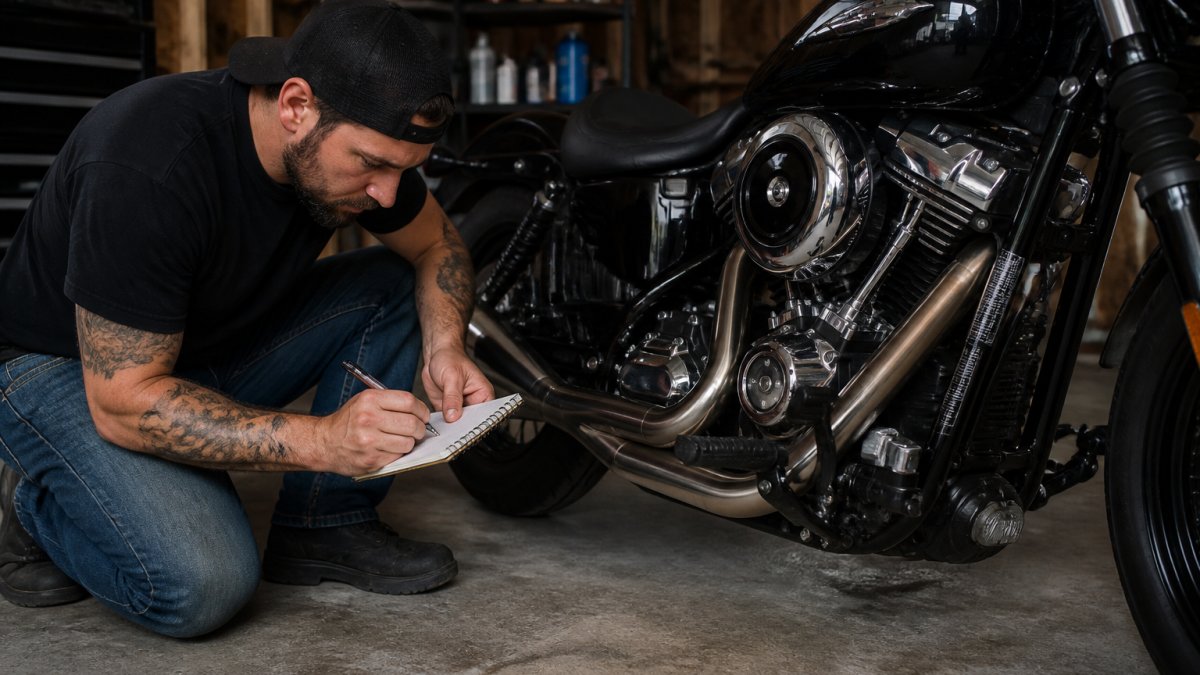
How to Find Your Motorcycle's Year, Make, Model, and Trim
Your VIN is the fastest way to get all four, it's stamped on the steering neck and printed on a frame sticker. Registration and insurance papers also list year, make, and model. For older or customized bikes, trim matters most: a base model and a Special can share a frame but use different forks, seats, and controls.
Mid-Year Changes and Platform Sharing: What Most Riders Miss
Manufacturers change parts mid-year without changing the model name. A part that fits an early 2005 build may not fit one made six months later, common on exhaust mounts, fork diameters, and wiring connectors. Platform sharing adds another layer: two bikes can look different but share a frame and engine, so parts swap between them. Indian's Challenger, Chieftain, Roadmaster, and Springfield share a platform, which is why one foot peg set fits all four from 2015 onward.

Step 2: Use Motorcycle VIN Parts Lookup Correctly
A VIN parts lookup is the fastest way to narrow down what your bike left the factory with. Enter the 17-character VIN into a dealer or manufacturer tool and it returns your build details.
A motorcycle VIN parts lookup is a search that uses your vehicle identification number to identify the exact factory configuration of your bike, including engine type, trim, and production run. It's the most precise starting point you have.
But a VIN has limits, and knowing them saves you from false confidence.
Where to Find the VIN on Your Motorcycle
On most motorcycles, the VIN is stamped into the steering neck and printed on a compliance label on the frame; many models also carry it on a swingarm or under-seat sticker. If the frame stamp is worn or painted over, check your registration and insurance documents. Write the VIN down exactly, one transposed character sends the lookup to a different bike.
How to Read the 17 Characters
You don't need to memorize the standard, but the structure helps you sanity-check what a tool returns:
- Characters 1-3 (WMI): the world manufacturer identifier, who built the bike and in which market.
- Characters 4-8 (VDS): the vehicle descriptor, where model, engine, and body style are encoded; it varies most between trims.
- Character 9: a check digit used to validate the VIN.
If a seller gives you a VIN and the model year code doesn't match the year they claim, stop and ask why.
What a VIN Can and Cannot Tell You
A VIN tells you the factory engine and trim level, model year, assembly plant, and original equipment part numbers for many components. It won't tell you what a previous owner swapped, what aftermarket accessories are installed, whether a used part came off a different trim, or what region- or emissions-specific equipment was added or removed.
Privacy: Share Your VIN Carefully
Your VIN links to your registration and ownership records, so share it only with trusted sellers and official lookup tools, never publicly in forums or classified listings, and never as a photo of your registration or compliance label. If a seller asks for your VIN to "check fitment," give them the year, make, model, and trim instead, and ask them to confirm fitment in writing.
When the VIN Lookup Isn't Enough
A VIN lookup resolves the factory build but not every variant difference. Two bikes with the same model name and year can still differ in fork diameter, brake caliper mounting, wiring connectors, or emissions equipment depending on trim and market. When the lookup returns a part number that doesn't match what's physically on the bike, trust the physical part and the OEM diagram, then verify with measurements.

Step 3: Cross-Reference with OEM Motorcycle Part Number Lookup
An OEM motorcycle part number lookup confirms what the factory used. Every OEM part has a unique number, and that number is the gold standard for fitment. Cross-reference like this:
- Find the OEM part number for your bike using the VIN lookup or an exploded parts diagram.
- Write the number down exactly, including any dashes or suffixes.
- Search that number to see every bike it was used on.
- Compare the fitment list to your exact year, make, model, and trim.
Exploded parts diagrams show every component in place with the part number called out, making it obvious when a bracket or spacer is required, something listings often leave out. A common mistake is trusting the first search result: part numbers get superseded, so always check whether a number has been updated.
Step 4: Confirm Aftermarket Motorcycle Parts Fitment
Aftermarket parts open up more options but shift the burden of fitment onto you. Aftermarket motorcycle parts fitment means checking that a non-factory component matches your bike's specs, not just its model name. Reputable sellers publish a fitment guide or filter, use it, entering your bike information so the tool matches parts to your exact build.
FLO MOTORSPORTS MX STYLE PEGS INDIAN MOTORCYCLE FTR 1200/1200S →
Here's a quick comparison of what changes when you move away from OEM:
| Factor | OEM Parts | Aftermarket Parts |
|---|---|---|
| Fitment guarantee | Exact by part number | Depends on seller's fitment data |
| Fitment guide | Factory diagram | Seller's filter or chart |
| Part number system | Manufacturer standard | Brand-specific numbering |
| Best for | Restoring factory spec | Upgrades and customization |
OEM vs. Aftermarket: What Changes When You Go Aftermarket
OEM parts fit because they were built for your bike; aftermarket parts fit because the maker designed them to match, and that's where quality varies. Look for sellers who publish detailed fitment guides. FLO Motorsports, for example, lists its foot pegs by bike, year, and part number: their MX-style pegs for the Indian FTR 1200 and 1200S fit 2019 and newer, and the touring version covers the Challenger, Chieftain, Roadmaster, and Springfield from 2015 up.

Your Motorcycle Part Fitment Checklist: Verify Before You Buy
Run this motorcycle part fitment checklist every time you order, five minutes prevents most wrong-part headaches.
- Confirm year, make, model, and trim from the VIN or registration
- Check for mid-year changes in your production window
- Run a VIN parts lookup for factory specs
Physical Measurements: The Step Catalogs Can't Do For You
When a listing is incomplete or two sources disagree, measurements settle it. Grab a tape measure and, for small features, a caliper.
- Bolt spacing and hole centers. Measure center-to-center, not edge-to-edge. A few millimeters is the difference between a bolt-on and a drill-out.
- Fork diameter. Measure the tube where the triple clamps grip it. Forks that look identical can differ by a millimeter or two between trims.
- Axle diameter and length. Confirm the axle slides through the wheel and the fork or swingarm legs without play.
Electrical Connectors and Sensors
Electrical parts fail fitment in ways a photo won't show, so check the connector housing shape, pin count, and keying before you order.
- Count the pins and note the housing style. Two sensors with the same function can use different plugs.
- Check whether the connector is sealed or unsealed, and whether the replacement includes the pigtail or just the sensor.
- Confirm voltage and signal type where the listing states it. A sensor that plugs in but reads the wrong range can trigger a fault code.
Verifying Used and Seller-Listed Parts
Used parts are where fitment gets murky, because the donor bike may not match yours. Before you pay:
- Ask for the donor bike's year, make, model, and trim, and its VIN if the seller will share it.
- Ask for a clear photo of the part number stamp or label on the part itself.
- Compare that number to the OEM number for your bike.
- Ask for photos of the mounting points, connector, and any wear or damage.
- Confirm the return terms in writing, including who pays return shipping.
- Ask whether the part came off a running bike or a wreck, and whether it was modified.
If a seller can't provide a part number or a clear photo of it, treat the listing as unverified.
Safety-Critical Parts Need Extra Scrutiny
For brakes, forks, steering components, wheels, and axles, add a physical measurement step and never trust a listing photo alone. Check bolt spacing, fork diameter, rotor thickness, and connector shape with a tape measure or caliper, and if the part is used, inspect for cracks, stripped threads, and heat damage. When in doubt, buy new from a source that publishes a fitment guide and stands behind it.
What to Do When Fitment Sources Disagree
Two sources will sometimes disagree, a seller's filter says yes, the OEM diagram says no. This happens with aftermarket parts, used listings, and cross-border fitment. Here's how to resolve it:
- Trust the OEM part number first. Factory data beats seller filters every time.
- Check the exploded diagram. It shows required hardware the listing may skip.
- Measure the physical part. Bolt spacing and connector type don't lie.
- Ask the seller directly. A good seller confirms fitment in writing.
- Check regional and emissions variants. The same model can use different exhausts or intakes depending on where it was sold.
If a seller can't or won't confirm fitment, walk away. There's always another part.
Conclusion
Fitment mistakes cost money, time, and sometimes a ruined weekend build. The fix is a simple habit: gather your exact bike details, run a VIN lookup, cross-reference the OEM part number, and confirm the aftermarket fitment guide before you order.
At THE SPEED SHOP CANADA, we stock performance parts for Harley-Davidson, powersports, and hot rods, and we back every order with free shipping on orders over $200.
Get started with THE SPEED SHOP CANADA and order the right part the first time.
Frequently Asked Questions
Can I use my motorcycle's VIN to confirm part fitment?
Yes, a VIN is the most reliable starting point for motorcycle part fitment. It identifies the exact model, year, and often the trim level. However, a VIN does not guarantee fitment for all aftermarket parts because aftermarket manufacturers sometimes design parts for a range of years or platforms. Use the VIN for a motorcycle VIN parts lookup, then confirm with an OEM motorcycle part number lookup or physical measurements before ordering.
How do I check whether an aftermarket part fits my motorcycle?
Start with the part's fitment guide from the seller. Cross-reference the listed year, make, model, and trim against your bike's details. Then check for model-year changes or mid-year updates that could affect mounting points. For critical components like brake calipers or exhaust headers, measure physical dimensions and connector types. If the listing does not specify your exact variant, contact the seller before ordering. A motorcycle part fitment checklist helps you cover every step.
What should I do if a parts catalog lists multiple fitment options?
When a catalog shows multiple options for the same part, your VIN or exact model variant is the deciding factor. Compare the catalog's notes on model-year changes, trim levels, and platform sharing. If your bike falls into a gap or the notes are unclear, call the parts provider with your VIN and ask them to confirm which option matches your specific build. Ordering the wrong variant is the most common cause of returns.
How can I verify that a motorcycle part is OEM?
Look for the manufacturer's part number stamped or printed on the part or its packaging. An OEM motorcycle part number lookup through a dealer or authorized catalog confirms whether the number is valid and which models it fits. Be cautious of listings that use vague descriptions or lack a part number. Genuine OEM parts typically come with branded packaging and a warranty. If the price seems unusually low, verify the source before buying.
Quote of the Day
Style is more than what we wear or how we decorate our spaces — it’s the freedom to choose what reflects who we are. Every design, every detail, is crafted with intention: to inspire joy, to add meaning, and to transform the everyday into something extraordinary. Because when comfort meets elegance, life itself feels more beautiful.
Brand Description
At our core, we believe that style should feel effortless yet meaningful. Each collection is carefully designed with attention to detail, blending modern aesthetics with everyday comfort. From timeless silhouettes to refined textures, our pieces are crafted to inspire confidence and elevate the way you live and dress. More than fashion, it’s a lifestyle made for you.