
How to Choose Harley Exhaust: A 2026 Guide

Table of Contents
- Understanding Harley Exhaust Styles and Configurations
- Harley Exhaust Fitment by Model and Year
- Evaluating Harley Exhaust Sound and Volume
- Harley Exhaust Performance and Tuning Considerations
- Materials, Construction, and Durability
- How to Choose the Right Exhaust for Your Riding Goals
- Emissions, Noise Regulations, and Warranty
- Installation, Maintenance, and Total Ownership Cost
- Frequently Asked Questions
Last Updated: October 12, 2026
Understanding Harley Exhaust Styles and Configurations
Choosing the right Harley exhaust starts with understanding what styles actually exist and how each one changes your bike's personality. The first thing riders discover is that "exhaust" isn't one thing, it's a range of configurations, each with distinct trade-offs between sound, performance, and aesthetics.
The main styles break down into three categories: 2-into-1 systems, staggered dual exhausts, and slip-on mufflers. Each represents a different philosophy about what your bike should deliver. A 2-into-1 combines both header pipes into a single muffler for a lean, aggressive look. Staggered duals keep two separate pipes but offset them for visual interest. Slip-ons replace only the muffler while keeping the factory headers, making them the easiest entry point into customization.
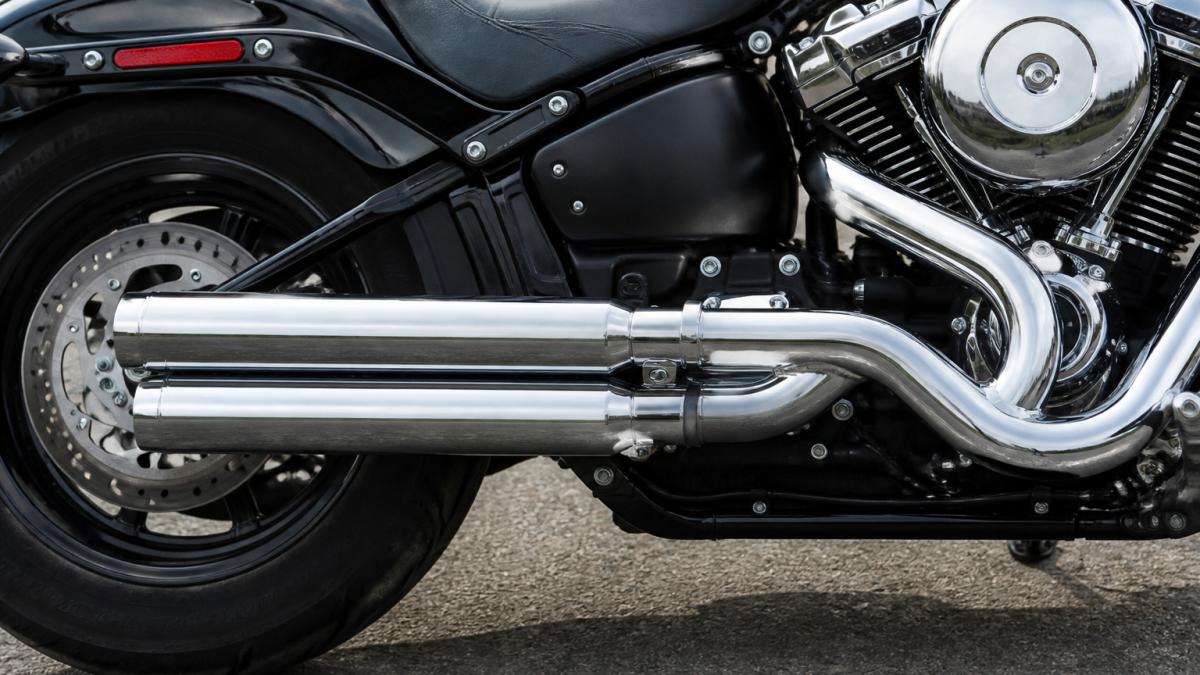
2-Into-1 Exhaust Systems
A 2-into-1 exhaust combines both cylinders into a single pipe and muffler. This design creates a distinctive stepped appearance where the headpipes start at 1-3/4" and transition to 1-7/8" before meeting at an advanced inner collector. The result is a lean, purposeful silhouette that dominates the rear of your bike.
Performance-wise, 2-into-1 systems optimize exhaust flow through a single path. The stepped header construction and inner collector design manage back pressure efficiently, which can improve low-end torque. Sound character tends toward deep and throaty, not necessarily louder, but with more presence and aggression than factory setups.
Consider the Bassani Road Rage Gen 2 for Softails. This system uses equal-length headers with stepped construction and full coverage heat shields. It's a proven choice for riders wanting balanced performance without extreme volume. The Bassani Ripper 2:1 Shorty takes a more aggressive stance with a louder, more pronounced tone, it's designed for riders who want their exhaust to announce their presence.

Staggered Dual and Drag Pipe Exhausts
Staggered dual exhausts keep two separate pipes but position them unevenly, typically one higher than the other. This creates visual contrast and breaks up the symmetry of traditional dual exhausts. Drag pipes are an extreme variant: they're minimal, uncovered pipes that hang low on either side of the rear wheel.
Staggered systems offer a middle ground between the aggressive single-pipe look and the symmetry of true duals. They're visually distinctive without committing fully to the 2-into-1 aesthetic. Sound tends to split between the two pipes, creating a different character than a single collector, typically more open and less concentrated than a 2-into-1.
The S&S Cycle 2:1 Sidewinder is worth noting here: while it's technically a 2-into-1, it routes the pipe sideways along the bike's frame rather than down the center. This gives you 2-into-1 performance characteristics with visual distinction. It includes a removable dB reducer and adapters for wide-band or stock O2 sensors, making it adaptable to different tuning approaches.
Slip-On Mufflers vs. Full Exhaust Systems
The distinction between slip-on mufflers and full exhaust systems determines how much of your factory setup remains. A slip-on replaces only the muffler while keeping the factory headpipes and collector. A full system replaces everything from the cylinder head to the rear.
Slip-ons are the entry point for most riders. Installation is straightforward, and they preserve factory fitment. Sound changes are noticeable but moderate compared to a full system. They're ideal if you want a quick upgrade without extensive modifications or tuning adjustments.
Full systems give you complete control over exhaust character. Because they include new headpipes and collectors, they optimize flow from the source. Performance gains are more substantial, and sound options range from subtle to dramatic depending on the muffler design. The trade-off is installation complexity and potential tuning requirements.
Harley Exhaust Fitment by Model and Year
Fitment is non-negotiable. An exhaust that doesn't fit your specific model wastes money and creates frustration. This is where many riders stumble: they find a system they love, order it, and discover it doesn't clear their frame or mounts to the wrong points.
Harley's engine family matters most. Modern M8 Softails (2018-2025) have different mounting points and frame geometry than earlier models. Baggers like Road Glide and Street Glide (2017-2024) have their own requirements. Touring models have different saddlebag clearance concerns. The year matters because Harley updates frame geometry, engine placement, and mounting hardware frequently.
The Bassani Ripper 2:1 Shorty is specifically designed for M8 Softails from 2018-2025. The Rinehart 2:1 for Baggers targets 2017-2024 models. These aren't arbitrary restrictions, they're engineering constraints.

Before ordering, verify your model and year. Check whether your bike has been heavily customized, extended frames, lowered suspensions, or custom seat heights can affect clearance. If you're unsure, THE SPEED SHOP CANADA can help verify compatibility before you commit.
Evaluating Harley Exhaust Sound and Volume
Sound is subjective, but it's also measurable. Understanding the difference between deep, throaty, loud, and subdued tones helps you choose what actually matches your preferences, not what marketing copy promises.
A deep tone emphasizes lower frequencies. It's present and authoritative without necessarily being loud. Throaty sound has character and resonance, it's the acoustic signature of the exhaust design. Loud refers to decibel level, which is independent of character.
The Bassani Ripper 2:1 produces a louder, more aggressive tone than the Road Rage Gen 2. Both are 2-into-1 systems, but the Ripper's stepped design and collector geometry create a sharper acoustic signature.
Slip-on mufflers generally produce more moderate sound levels than full systems. The factory headpipes constrain flow, which limits the acoustic energy the muffler receives. Full systems can achieve more dramatic sound because the optimized headers deliver more energy to the muffler.
Riding conditions matter. A system that sounds aggressive at cruise might be fatiguing on a long highway. Conversely, a moderate system might feel subdued in stop-and-go traffic.
Harley Exhaust Performance and Tuning Considerations
Performance gains from exhaust upgrades are real but context-dependent. A new exhaust doesn't automatically add horsepower, it removes restrictions, which allows your existing engine to breathe more efficiently. How much benefit you realize depends on what else is in your system.
An optimized exhaust works best with matching intake and fuel management. A full exhaust system on a bike with factory intake and carburetor will show modest gains. The same exhaust on a bike with a high-flow air filter and fuel controller shows more substantial improvement because the entire system is balanced.
Back pressure is the critical concept here. Too little, and your engine loses low-end torque. Too much, and you limit power at higher RPMs. Exhaust designers balance this through collector design, pipe diameter, and muffler internals.
BASSANI RIPPER 2:1 SHORTY EXHAUST HARLEY DAVIDSON SOFTAIL 18-25 M8 →
Many riders discover that tuning becomes necessary after a full exhaust upgrade. The fuel mixture that worked with factory exhaust may run lean or rich with new flow characteristics. A simple fuel controller or ECU flash adjusts the air-fuel ratio to match the new exhaust.
Materials, Construction, and Durability
Exhaust materials determine how long your system lasts and how it looks over time. Stainless steel resists corrosion and polishes to a mirror finish. Mild steel is cheaper but requires regular maintenance to prevent rust. Chrome plating adds visual appeal but requires care to maintain.
Hand MIG welding, as used in the Bassani systems, creates stronger joints than automated welding. The welder controls heat and penetration, resulting in welds that don't crack under thermal cycling. Full coverage heat shields protect surrounding components from excessive temperature and protect the exhaust from road debris and moisture.
Construction methods matter. A fully welded one-piece design, like the Bassani Ripper, is stronger and more rigid than a bolted assembly. It won't develop leaks or loose connections over time.
O2 bung placement and adapters affect serviceability. The 18mm O2 bungs with 12mm adapters in many Bassani and S&S systems allow flexibility in sensor placement for different tuning approaches. This matters if you plan to add a fuel controller or make future modifications.
How to Choose the Right Exhaust for Your Riding Goals
Your riding style should drive the decision more than aesthetics alone. A bike used primarily for short cruises around town has different requirements than one ridden on extended highway trips.
For aggressive riding and stop-and-go traffic, a 2-into-1 system with strong low-end character delivers the presence and response you want. The concentrated sound and torque emphasis match your use case.
For highway touring and long-distance comfort, moderate sound levels and balanced performance matter more. Extended riding time means fatigue from excessive noise becomes a real concern. A full system like the Rinehart 2:1 for Baggers balances performance with manageable sound levels.

For riders prioritizing customization without major modifications, slip-on mufflers offer a practical starting point. They're easy to install, preserve factory fitment, and deliver noticeable character changes without requiring tuning adjustments.
Consider your bike's current state. A heavily customized bike with a high-flow intake and fuel controller benefits from a matching full exhaust system that optimizes the entire flow path.
Emissions, Noise Regulations, and Warranty
Aftermarket exhausts can affect your bike's emissions compliance and void factory warranties. Understanding these implications before purchasing prevents surprises later.
Many jurisdictions have noise regulations that specify maximum decibel levels (Motor Vehicle Safety Regulations). Systems with removable dB reducers, like the S&S Cycle 2:1 Sidewinder, offer flexibility, you can run quieter for daily riding and remove the reducer for weekend cruises.
Emissions compliance depends on your bike's year and the exhaust system's design. Some systems are designed to work with catalytic converters; others bypass them entirely. The S&S Cycle 2:1 Sidewinder explicitly carries no catalytic converter, which affects emissions profile. Check local regulations before choosing a system that removes emissions equipment.
Factory warranties typically don't cover modifications (harley-davidson.com). Installing an aftermarket exhaust may void your powertrain warranty. This isn't always enforced, but it's a real consideration if your bike is still under warranty. Some riders choose slip-on mufflers initially to preserve warranty coverage, then upgrade to full systems after the warranty period expires.
Installation, Maintenance, and Total Ownership Cost
Installation difficulty varies dramatically between slip-ons and full systems. A slip-on muffler typically requires two to four bolts and takes an hour. A full system involves removing the factory exhaust, potentially modifying mounting points, and ensuring proper fitment and alignment.
Maintenance is straightforward for most systems. Stainless steel requires occasional cleaning to maintain appearance. Mild steel or chrome systems need regular attention to prevent corrosion. Heat shields should be inspected periodically to ensure they remain secure.
Total ownership cost extends beyond the purchase price. Factor in installation labor, potential tuning adjustments, and maintenance. A slip-on muffler might cost $400-600 installed.
Consider financing options if the upfront cost is significant. THE SPEED SHOP CANADA offers flexible payment plans including Shop Pay, RBC PayPlan, and Sezzle, making it easier to spread the investment over time.
Choosing a Harley exhaust comes down to matching your riding goals, bike model, and budget with a system that delivers the performance and character you want.
Frequently Asked Questions
How do I know if an aftermarket exhaust fits my Harley?
Check your motorcycle's model year, engine size (M8, Twin Cam, etc.), and frame type (Softail, Bagger, Touring). Match these specs to the exhaust listing before purchase. The Bassani Road Rage Gen 2 Exhaust, for example, fits 2018-2025 Softail models specifically. If you're unsure about fitment on an older or heavily customized Harley, contact the seller with your VIN and build details, most reputable shops verify compatibility before shipping.
Do I need to tune my Harley after installing an aftermarket exhaust?
An aftermarket exhaust changes your bike's air-fuel ratio. Most riders benefit from a fuel tuner or ECU flash to optimize performance and prevent running too lean. Without tuning, you may lose efficiency and risk engine damage. Some exhausts include O2 sensor bungs (like the Bassani Ripper) to support tuning. Budget $300-$600 for a quality tune on top of your exhaust cost.
What is the difference between slip-on mufflers and a full exhaust system?
Slip-on mufflers replace only the muffler section and bolt onto your existing pipes, they're easier to install and less expensive but offer modest performance gains. Full exhaust systems replace headpipes, collectors, and mufflers, delivering better airflow, more horsepower, and greater sound character. Full systems like the Rinehart 2:1 Exhaust provide superior performance but require more installation work and cost significantly more.
What exhaust style delivers the best performance for a Harley?
2-into-1 exhausts (like the S&S Cycle Sidewinder and Bassani Ripper) maximize scavenging and horsepower by consolidating exhaust flow through a single pipe. They typically add 5-15 hp depending on your engine and tune. Dual exhausts offer more balanced back pressure and easier installation. Choose 2-into-1 if performance is your priority; choose dual if you prefer easier fitment and classic aesthetics.
Quote of the Day
Style is more than what we wear or how we decorate our spaces — it’s the freedom to choose what reflects who we are. Every design, every detail, is crafted with intention: to inspire joy, to add meaning, and to transform the everyday into something extraordinary. Because when comfort meets elegance, life itself feels more beautiful.
Brand Description
At our core, we believe that style should feel effortless yet meaningful. Each collection is carefully designed with attention to detail, blending modern aesthetics with everyday comfort. From timeless silhouettes to refined textures, our pieces are crafted to inspire confidence and elevate the way you live and dress. More than fashion, it’s a lifestyle made for you.