
ATV Performance Exhaust System Benefits Explained

Table of Contents
- What an ATV Performance Exhaust System Actually Changes
- ATV Exhaust Power Gains: What to Realistically Expect
- ATV Exhaust and Fuel Tuning: The Step Riders Skip
- Sound, Noise Limits, and Responsible Riding
- ATV Exhaust System Materials and Durability
- ATV Exhaust Maintenance: Keeping the Gains
- When an ATV Performance Exhaust Upgrade Is Not Worth It
- Conclusion
- Frequently Asked Questions
Last Updated: October 21, 2026
What an ATV Performance Exhaust System Actually Changes
An ATV performance exhaust system is a complete replacement for the factory exhaust that changes how gases leave the engine, and that single change touches power delivery, throttle response, engine heat, sound, and weight. The stock exhaust is built to be quiet, cheap to produce, and legal everywhere. An aftermarket system is built to move gas faster.
Here is the short version of what actually changes:
- Exhaust flow increases because the pipe diameter, bends, and muffler internals restrict gas less than the stock unit.
- Backpressure drops, which helps the engine breathe at higher rpm.
- Weight falls, since aftermarket systems often use thinner-walled stainless or aluminum mufflers.
- Heat sheds faster because gas exits sooner instead of soaking into the engine bay.
- Sound changes, for better or worse depending on the muffler and insert you choose.
What most guides miss is that these benefits do not arrive together or in equal measure. A free-flowing system that helps top-end pull can soften low-end torque if the fueling is not adjusted. That trade-off is the whole story, and it is where the rest of this guide goes.
ATV Exhaust Power Gains: What to Realistically Expect
Realistic gains from an ATV exhaust power upgrade are modest on a stock machine: typically a low-single-digit horsepower improvement, concentrated in the midrange and top end, with torque delivery shifting rather than multiplying. Anyone promising a dramatic transformation is selling you something.
The reason is simple physics. An exhaust is the last link in a chain that starts at the air filter, runs through the throttle body and intake, and ends at the muffler. If the intake still flows like a stock intake, a wide-open exhaust has nothing extra to work with. Riders who bolt on a pipe and feel a big difference usually had a restricted stock system to begin with, or they changed fueling at the same time.
Why Model and Displacement Matter More Than Marketing Claims
A 450cc sport quad and a 700cc utility machine respond to exhaust changes in completely different ways. Big single-cylinder utility engines with low-revving torque profiles gain little from a race-baffle system, and often lose low-end grunt. High-revving sport engines with aggressive cam profiles respond better to reduced backpressure.
A useful way to read a published dyno chart is to look at three things: where the curve crosses the stock curve, how wide the gain band is, and what happens below 4,000 rpm. A system that adds peak power but dips below the stock torque curve at trail speeds is a poor match for a rider who spends the day at part throttle. A system that holds or slightly improves low-end torque while adding midrange is the better trail choice even if its peak number is smaller.
Our advice: match the system to how the machine is actually ridden. A trail rider who spends the day at part throttle needs midrange, not peak power. A dunes or track rider who lives above half throttle can justify a more open system. Ask before you buy whether the system was designed for your displacement class and riding style, because a generic "fits most quads" listing rarely delivers.
ATV Exhaust and Fuel Tuning: The Step Riders Skip
Fuel tuning is not optional after an exhaust change. An ATV exhaust and fuel tuning adjustment is what keeps the engine from running lean once the exhaust flows better, and skipping it is the most common mistake we see.
Here is what happens without tuning. The engine management system was calibrated for the restriction of the stock exhaust. Fit a freer-flowing system and the engine pulls more air, but the fuel map does not know that. The result is a lean condition: hotter combustion temperatures, reduced power, and in serious cases, burned valves or a scored piston.
Depending on the machine, the fix looks like one of these:
- Carbureted quads: rejet the carburetor, usually a larger main jet and an adjusted needle position.
- EFI models with a closed system: a fuel controller or flash tune that richens the map to match the new airflow.
- EFI models with an open tuning platform: a custom map loaded by a shop with a dyno.
Do not guess at jetting. A wideband air-fuel gauge or a dyno session removes the guesswork, and it is cheaper than a top-end rebuild. Many riders also pair the exhaust with a high-flow air filter at the same time, since both changes push the fueling in the same direction and can be tuned together in one session.
Sound, Noise Limits, and Responsible Riding
Exhaust sound is the benefit riders feel first and regret last. A performance muffler changes the exhaust note, and volume is a choice you make at purchase, not a fixed outcome.
The practical reality is that land access is fragile. Trail systems, crown land, and private riding areas close when complaints pile up, and loud exhaust is the fastest way to generate them. Responsible riding means choosing a system with a removable sound insert or spark arrestor, keeping the insert in for trail use, and only running the open configuration where it is appropriate.
Check the rules before you ride. Sound limits vary by jurisdiction and by land manager, and a machine that passes on one trail system may fail on another. Transport Canada's vehicle and tire safety guidance is a reasonable starting point for understanding federal vehicle requirements, but provincial and municipal rules, plus the land manager's own conditions, are what actually govern where you ride.
ATV Exhaust System Materials and Durability
Stainless steel is the default choice for a durable ATV exhaust system, and for good reason: it resists corrosion from mud, water crossings, and road salt far better than mild steel, and it holds up to the heat cycling of off-road use.
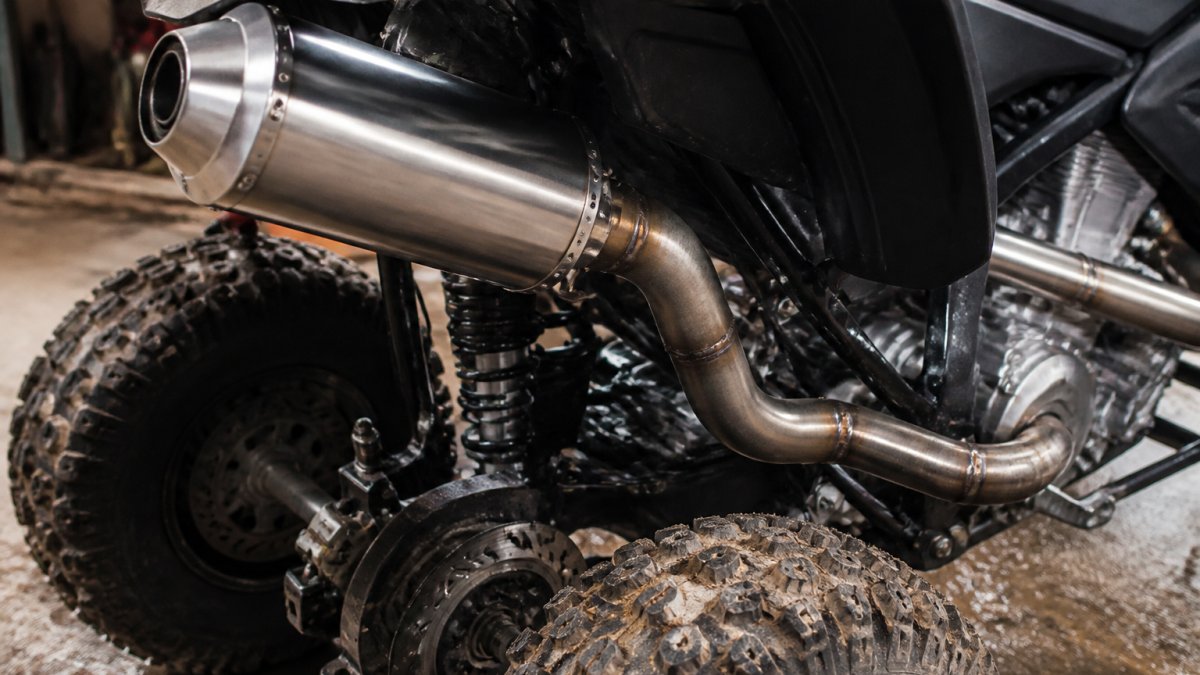
What the spec sheet does not tell you is where systems fail. The weak points are often the welds at the header flange and the packing inside the muffler. Poor welds can crack under vibration; packing can burn out and the note gets harsher over time.
A few material trade-offs worth knowing before you buy:
- Wall thickness: thinner walls save weight but transmit more heat and vibration, and they dent more easily on rocks and logs. A mid-weight system is usually the better trail compromise.
- Header material: stainless headers resist corrosion and hold heat well; mild-steel headers are cheaper but rust from the inside out at the collector.
- Muffler body: aluminum bodies cut weight but can deform under impact; stainless bodies are heavier but more forgiving on utility machines.
- Packing type: serviceable, replaceable packing extends the life of the muffler and keeps the note consistent; sealed units must be replaced whole when the packing burns out.
- Titanium: exists at the top end and saves real weight, but for most trail and utility riders the cost is hard to justify against a good stainless system, and titanium repairs are harder to source locally.
Weight matters too. Thinner-wall stainless and aluminum muffler bodies cut weight compared with the stock steel unit, and less weight high on the machine helps handling more than most riders expect.
Fitment is part of durability. A system that mounts with proper rubber isolators and clears the plastic and the rear tire will last longer than one that vibrates against bodywork. Check the manufacturer's fitment notes for your specific model, and confirm that replacement packing, gaskets, and hardware are available before you commit.
ATV Exhaust Maintenance: Keeping the Gains
ATV exhaust maintenance is straightforward, and it is what separates a system that still performs after three seasons from one that has quietly lost its edge. The gains you paid for erode through carbon buildup, loose fasteners, and burnt packing.
A practical maintenance routine:
- Check fasteners and flange bolts after the first few rides and again each season; vibration loosens them.
- Inspect welds and joints for cracks or soot streaks, which indicate a leak.
- Clean the muffler and tip of mud and debris so heat can escape.
- Repack the muffler when the note gets noticeably harsher or louder than it was new.
- Re-check fueling if you change the insert, air filter, or elevation you typically ride at.
A leaking joint costs power and makes the machine louder than it should be, so a five-minute inspection each season is worth more than any additive.
When an ATV Performance Exhaust Upgrade Is Not Worth It
An exhaust upgrade is not worth it when the rest of the machine is stock and you expect a dramatic power jump, when you ride mostly at low speed in noise-sensitive areas, or when the budget would be better spent on tires, suspension, or maintenance.
Be honest about the goal. If you want a better sound and a modest midrange improvement, a quality system with proper tuning delivers that. If you want a genuinely faster machine, the exhaust is one piece of a package that includes intake, fueling, and often clutch or gearing work. Buying the pipe first and expecting the rest to follow is how riders end up disappointed and out of pocket.
Conclusion
The hardest part of an exhaust upgrade is not choosing a muffler; it is getting the fueling, fitment, and sound configuration right for how you actually ride. That is where THE SPEED SHOP CANADA helps: we stock performance exhaust systems for powersports machines alongside the intake and tuning parts that make them work, we ship free across Canada on orders over $200, and we offer financing through Shop Pay, RBC PayPlan, and Sezzle so a full build does not have to happen all at once. As a Drag / Parts Canada dealer, we can talk through fitment for your specific machine before you order.
Frequently Asked Questions
Can an aftermarket ATV exhaust improve power or throttle response?
It can, but the gain is modest unless the exhaust is matched with fuel tuning. A performance exhaust reduces backpressure and improves exhaust flow, which helps engine breathing and throttle response. Most riders notice a sharper feel off idle before they notice a big horsepower number. Expect a few percent rather than a dramatic jump, and the result depends on your model, displacement, and whether the ECU or carburetor is adjusted to suit the new exhaust.
Does an ATV need fuel tuning after an exhaust upgrade?
In most cases, yes. A freer-flowing exhaust leans out the air-fuel mixture, and modern fuel-injected ATVs rely on an ECU map that was written for the stock system. Skipping ATV exhaust and fuel tuning can cause popping on deceleration, flat spots, and higher exhaust temperature. A fuel controller or reflash brings the mixture back in line. Carbureted machines usually need a jet change. Treat tuning as part of the install cost, not an optional extra.
Does an ATV performance exhaust make the machine louder?
Usually it does, but not always by as much as riders expect. Many systems ship with a removable spark arrestor or sound insert that lets you quiet the exhaust for trail use and open it up for track days. Check the sound level before you buy, and check the rules where you ride. Excessive noise is the fastest way to lose trail access, so a system you can tone down is worth more than one that only runs loud.
How do you maintain an aftermarket ATV exhaust?
Wash it after every muddy ride, dry it fully, and inspect the packing, joints, and mounting springs. Repack mufflers on the schedule the manufacturer recommends, since blown packing makes the exhaust louder and harsher. Check header bolts for loosening after the first few heat cycles, and touch up any corrosion on steel sections before it spreads. Stainless and titanium systems need less attention than mild steel, but none of them tolerate packed mud sitting on the surface for weeks.
Quote of the Day
Style is more than what we wear or how we decorate our spaces — it’s the freedom to choose what reflects who we are. Every design, every detail, is crafted with intention: to inspire joy, to add meaning, and to transform the everyday into something extraordinary. Because when comfort meets elegance, life itself feels more beautiful.
Brand Description
At our core, we believe that style should feel effortless yet meaningful. Each collection is carefully designed with attention to detail, blending modern aesthetics with everyday comfort. From timeless silhouettes to refined textures, our pieces are crafted to inspire confidence and elevate the way you live and dress. More than fashion, it’s a lifestyle made for you.